LAS PALMAS HOSTS THE INSTITUTIONAL PRESENTATION OF THE EUROPEAN WHEEL PROJECT
The Port of Las Palmas yesterday hosted the institutional presentation of the European WHEEL project. This innovative floating offshore wind technology, developed by the Spanish engineering firm ESTEYCO, is designed to tackle the challenges of the floating offshore market and accelerate the deployment of marine renewable energy across Europe and worldwide.
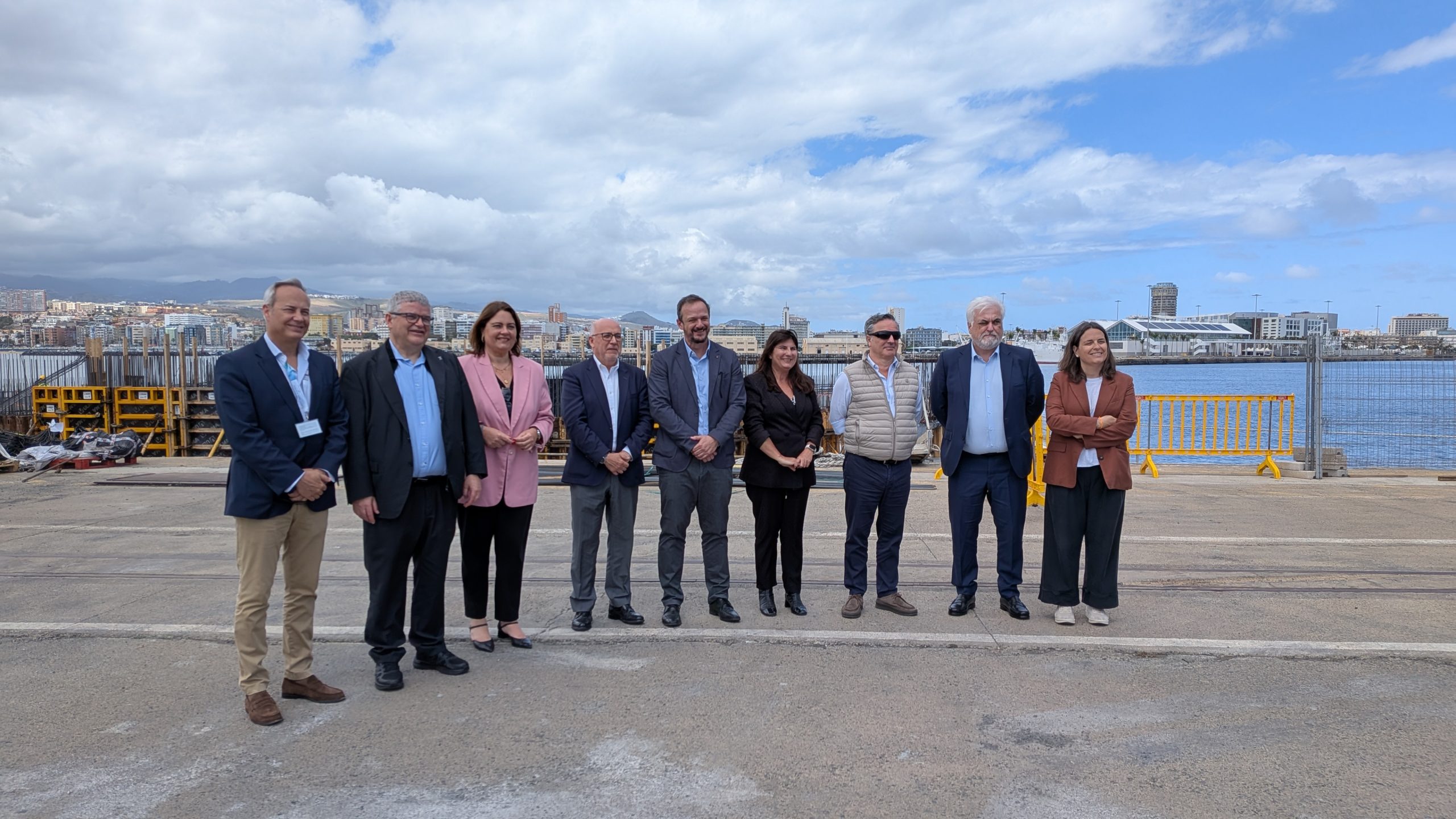
The event, held at the León y Castillo Poniente quay where construction is currently underway, brought together institutional, business, and technological leaders linked to offshore wind development and the energy transition in the Canary Islands. The presentation featured Antonio Morales, President of the Cabildo of Gran Canaria; Julieta Schallenberg, Deputy Minister for Ecological Transition and Energy of the Government of the Canary Islands; Beatriz Calzada, President of the Port Authority of Las Palmas; Joaquín Brito, Director of PLOCAN; and Carlos García Acón, CEO of ESTEYCO, among other institutional representatives.
This presentation marks a milestone for the project, which is currently under construction with installation slated for late 2026 or early 2027. The prototype will be deployed at the PLOCAN test site, at a depth of approximately 100 metres. It is expected to operate under real-world conditions for up to ten years, serving as a platform for numerous R&D initiatives.
WHEEL is one of the most advanced floating offshore wind initiatives currently under development in Spain and Europe. Led by ESTEYCO, the project is being executed by an international consortium of sector-leading companies and research centres: Rover, Bekaert, Vicinay, CEMEX, Repnaval, PLOCAN, IH Cantabria, EnBW, 2B Energy, and CoreMarine, with additional participation from major multinationals such as the Belgian group Sarens.
Regarding local industry impact, the project—which partners with the Repnaval shipyards (Zamakona Group) and the Oceanic Platform of the Canary Islands (PLOCAN)—expects over 80% of its budget (excluding the turbine) to be executed by Canary Islands-based companies. To date, 24 local firms are involved, including logistical support provided by Boluda-Suárez.
The initiative is funded by the European Commission through the Horizon Europe programme (Project ID: 101084409), with an initial budget of €25.6 million and a €16.6 million European grant. Furthermore, the project has secured complementary R&D funding and private backing from the Japanese energy group J-Power, a major international player in power generation and renewable energy development.
A technology designed to reduce costs and accelerate offshore deployment
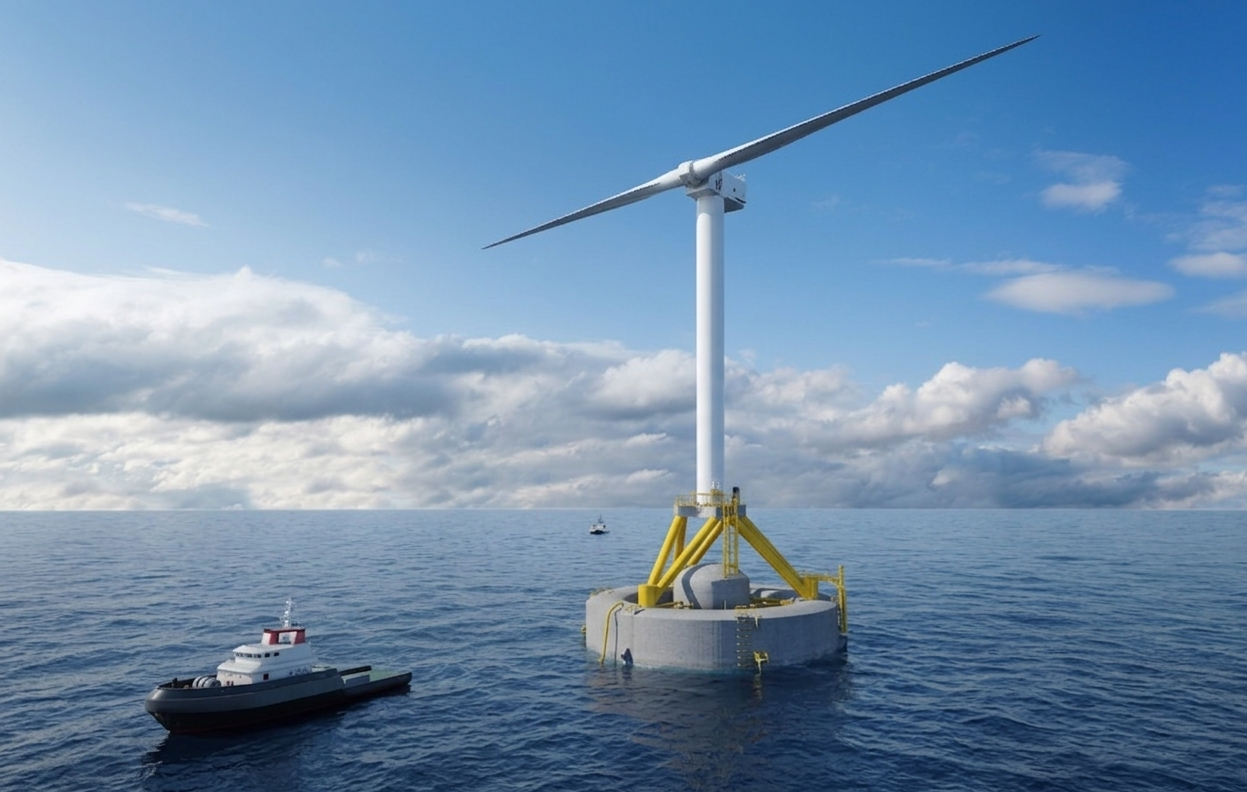
WHEEL technology was engineered by ESTEYCO as an evolution of the “floating spar” concept. It incorporates innovative solutions aimed at significantly reducing manufacturing, installation, and operational costs for floating offshore wind farms, thereby contributing to a lower Levelised Cost of Energy (LCoE).
Designed to leverage the best features of current floating market technologies, WHEEL combines the efficiency of barges or semi-submersibles during assembly and installation with the superior stability of the spar configuration during operation. Key advantages include:
-
Reduced material consumption and a smaller carbon footprint.
-
Maximum compatibility with existing port infrastructure due to its compact, low-draught design.
-
Scalable industrial manufacturing with high local content, thanks to the strategic use of concrete.
-
High operational stability even under demanding marine conditions.
The Canary Islands: A strategic hub for floating offshore wind
The project presentation also underlined the strategic role of the Canary Islands in the development of floating offshore wind and the European energy transition.
During the event, participating institutions highlighted the strategic value of floating offshore wind for the archipelago, noting its contribution to decarbonisation and energy sovereignty, as well as its capacity to drive a new industrial value chain linked to the blue economy, innovation, and specialised employment.
Due to its oceanographic conditions, port capacity, and robust industrial ecosystem, the Canary Islands are positioned to become a leading offshore development hub in Southern Europe. In this context, projects like WHEEL offer an opportunity to strengthen the local value chain, generate skilled jobs, and position Spanish and Canarian companies at the forefront of a rapidly expanding global market.
Furthermore, the development of this demonstrator will help consolidate key industrial and operational capabilities ahead of future commercial offshore wind auctions in Spain.
WHEEL aims to act as a catalyst for the entire sector, demonstrating that the Canary Islands can play a leading role in developing innovative technologies for the blue economy and the decarbonisation of the energy system.
In a context shaped by the upcoming commercial deployment of offshore wind in Spain, WHEEL positions itself as one of the most relevant demonstrator projects in Southern Europe and a driving force for consolidating industrial, technological, and port capabilities in the Canary Islands.